REACTOR now searches the open web while it reasons, and saves every source it finds into your Research Space. Here's how that makes the work better.
Good research is cumulative. Each question you answer should make the next one easier — the supplier you vetted, the spec you confirmed, the benchmark you established all becoming part of the foundation you build on. REACTOR's web search is designed around exactly that idea: bring the live web into your reasoning, and keep what it finds so your Research Space grows richer with every question.
The reasoning has always been REACTOR's strength — chemistry-native thinking about mechanism, synthesis, and materials behavior. Web search extends that reasoning to everything happening right now: today's supplier grades, this year's industry targets, the data sheet published last month. And because every source is captured as a Reference in your Research Space, the value doesn't end with the answer. It stays.
The web becomes part of your workbench
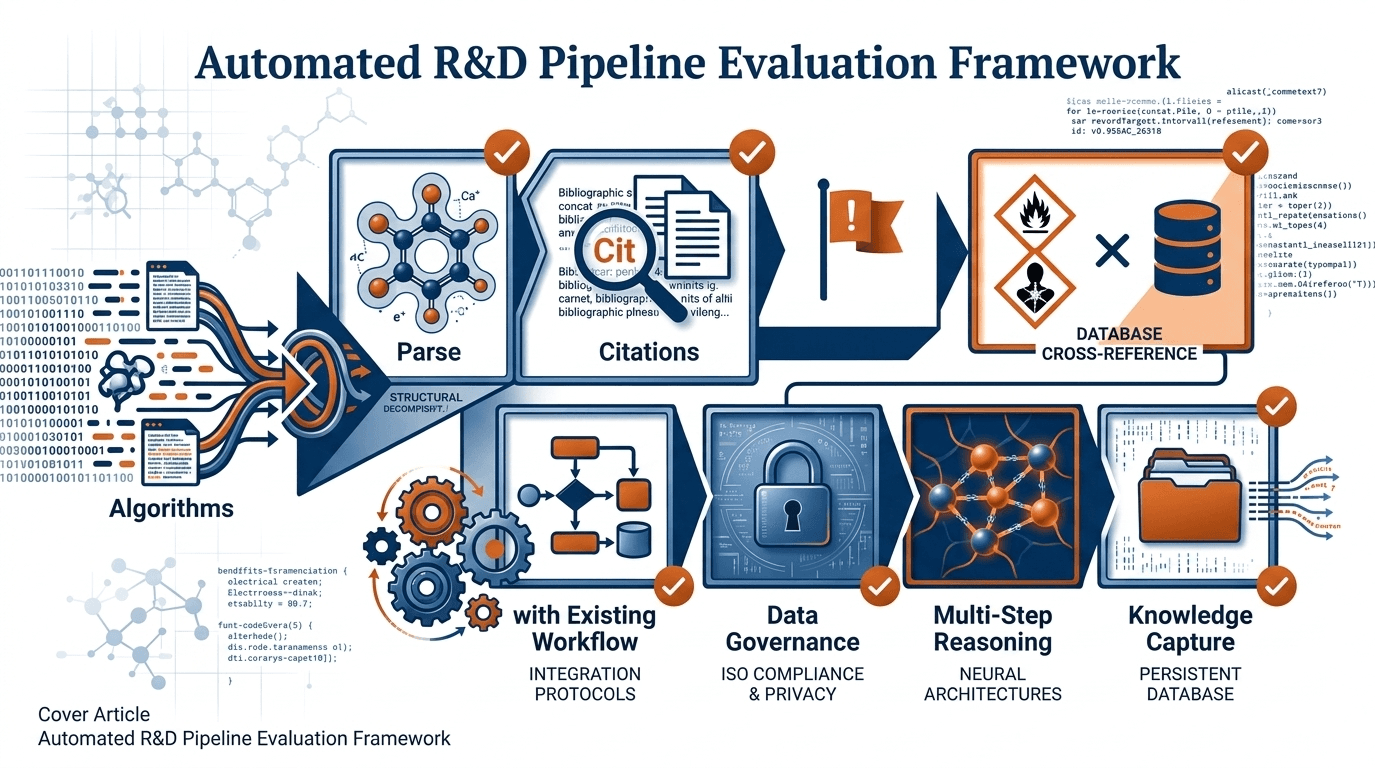
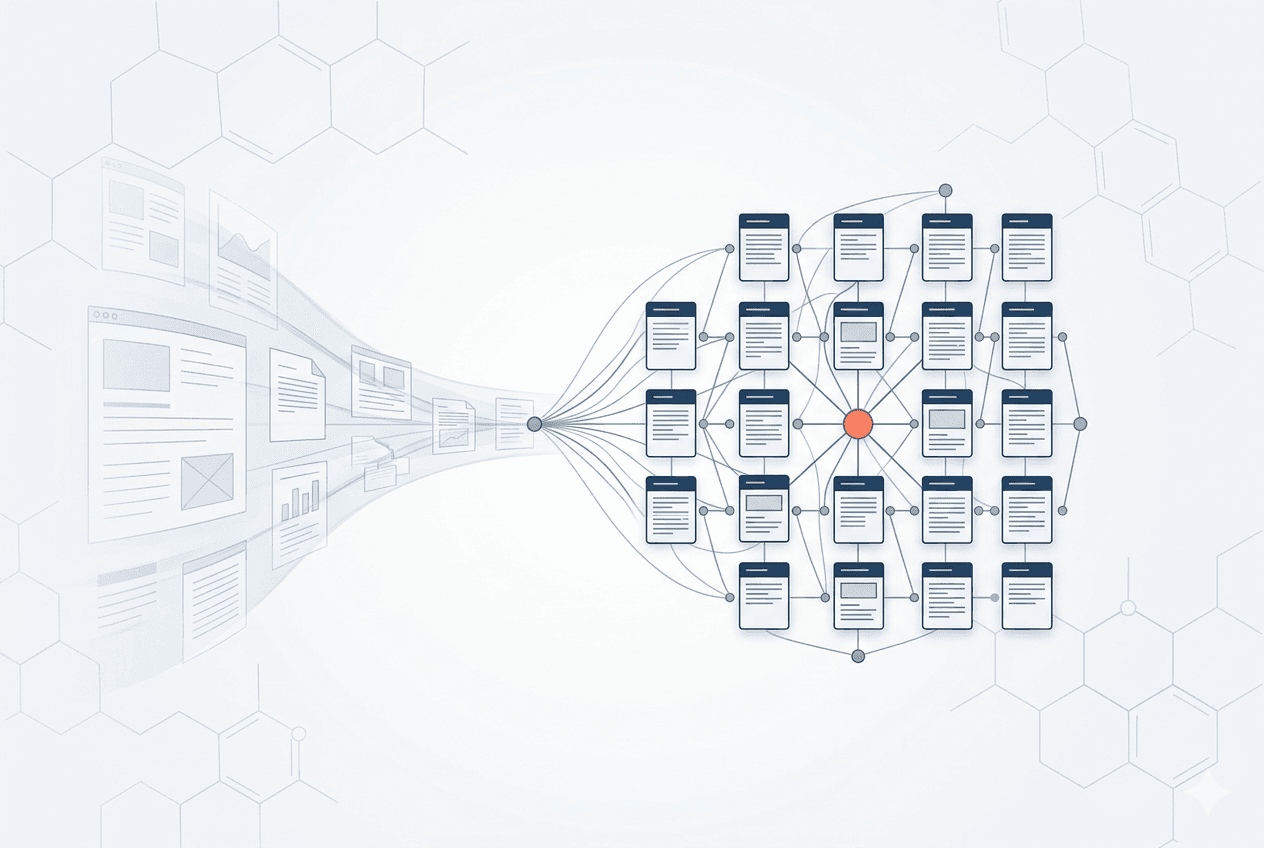
When you ask REACTOR something that depends on current information, it retrieves the relevant pages, reasons over them, and ingests each one into your Research Space as a saved, traceable Reference. The answer draws on that material, and the material remains, ready to be re-queried, cross-referenced, and built on as your project develops.
Most assistants search the web to write you an answer. REACTOR searches the web to build your Research Space.
It works hand in hand with REACTOR's literature engine. Questions grounded in the published record run the chemistry-native literature search; questions that live outside the journals — a supplier, a data sheet, an instrument spec, a market benchmark — go to the web. The right source for each question, all in one workbench, all saved to the same Research Space.
Real questions, richer answers
Here's what that looks like across the kinds of questions that move a project forward. Each example below is from a live Research Space focused on sulfide solid electrolytes.
Sourcing the right material. Ask for current commercial options for a precursor and REACTOR lays them out with the detail that drives a decision — for battery-grade lithium sulfide, it surfaced MilliporeSigma's 99.995% material (low sodium, <35 ppm) alongside Ampcera's >99.9% lab-scale powder, each saved as a Reference you'll still have when it's time to reorder.
Matching your setup to the method. Ask whether your hardware can meet a protocol and REACTOR pulls the published specifications: dedicated cold-isostatic presses like the YLJ-CIP-500M reach 0–500 MPa, comfortably covering the ~100–300 MPa where sulfide electrolytes densify. The instruments and their ratings land in your Library for the next protocol with pressure requirements.
Working safely from the start. Ask how to handle a reagent and REACTOR builds the practical picture — for Li₂S, the H₂S hazard on contact with moisture, glovebox handling, PPE, inert storage, and incompatibilities, grounded in authoritative chemical-identity sources and pointing to the vendor SDS as the record. The whole safety picture lives in the space for anyone joining the project.
Placing your results in context. Ask how a number compares to where the field is heading and REACTOR assembles the current landscape, solid-state energy-density targets from Toyota (450–500 Wh/kg), CATL (~500 Wh/kg), and others, each annotated with its source, so your lab data reads against the commercial roadmap.
In every case the answer is genuinely useful on its own. What makes it powerful is that it doesn't disappear.
A Research Space that gets sharper as you use it
After a few sessions, your Research Space holds more than answers, it holds a structured, sourced body of evidence: the supplier comparison, the equipment specs, the safety guidance, the benchmark set, all saved as References in one place.
And REACTOR puts that to work. Ask a question that spans what you've gathered, which supplier and grade fit our synthesis, and how should we handle the material? — and it brings the sourcing, safety, and project context together into a single, decision-ready recommendation. Every question you ask leaves the space better equipped to answer the next. The research compounds.
Every answer, traceable to its source
Underpinning all of it: everything in REACTOR is sequentially referenced and traceable, literature, web results, your own notes, and answers from the Chemical Intelligence Layer alike. Each Research Space keeps a unified, numbered Reference set, so any claim in any answer traces straight back to where it came from. Current reasoning, accumulating context, and a clear trail behind every result.
See it on your own research
The best way to feel the difference is a real question from your own work, a supplier you need, a spec you're checking, a benchmark you want to place your results against. Open a Research Space, ask REACTOR, and watch it retrieve, reason, and save the sources. Then come back a week later and see how much your Research Space already knows.
Ready to Transform Your R&D?
See how Reactor's chemistry-native AI can accelerate your research and development workflows.
Schedule a Demo